
Scroll
For More
observational research report ↴
An observational analysis of button usage and pedestrian behaviour at a Sydney CBD crossing, and what a button's silence does to the people who press it.
01 — context
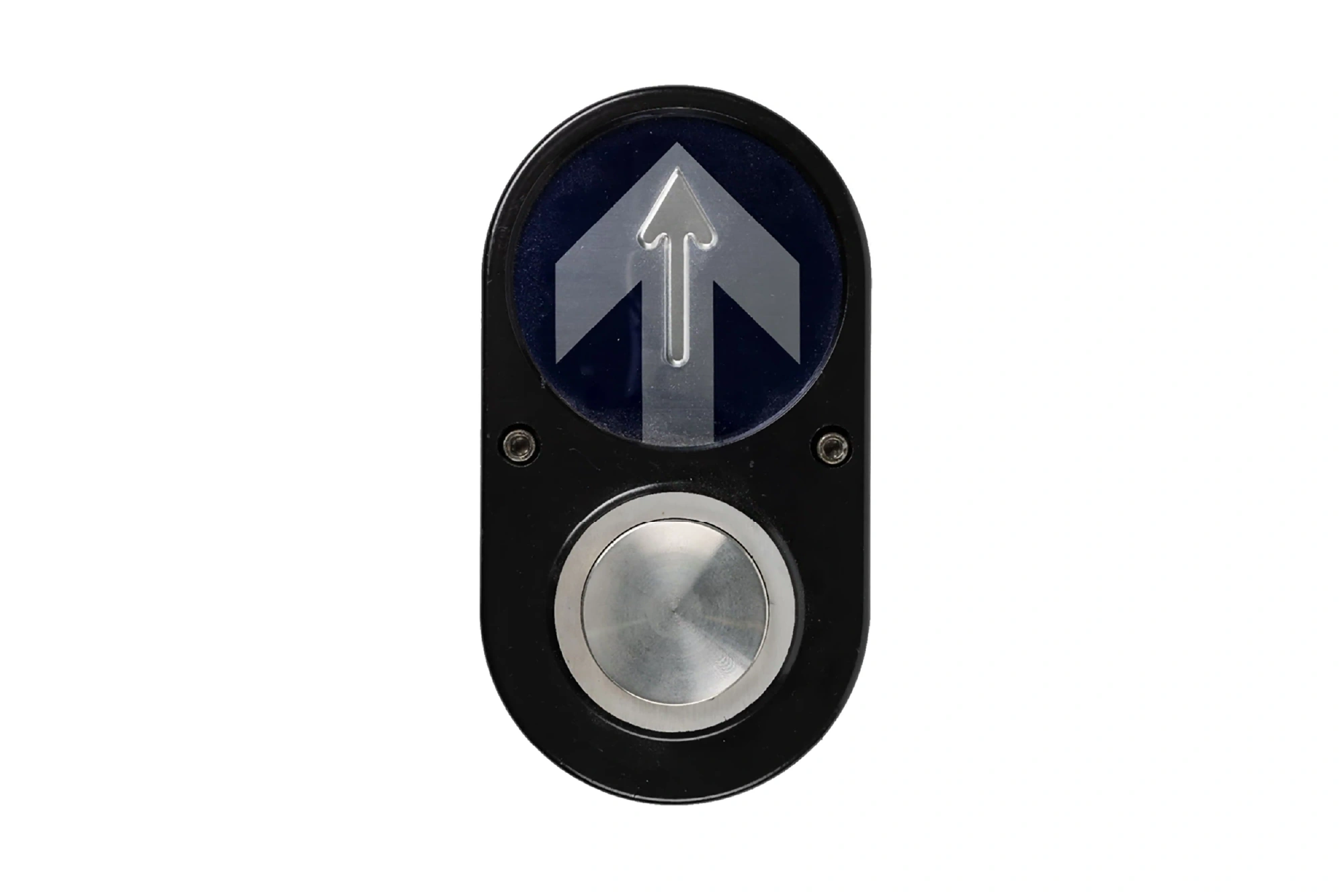
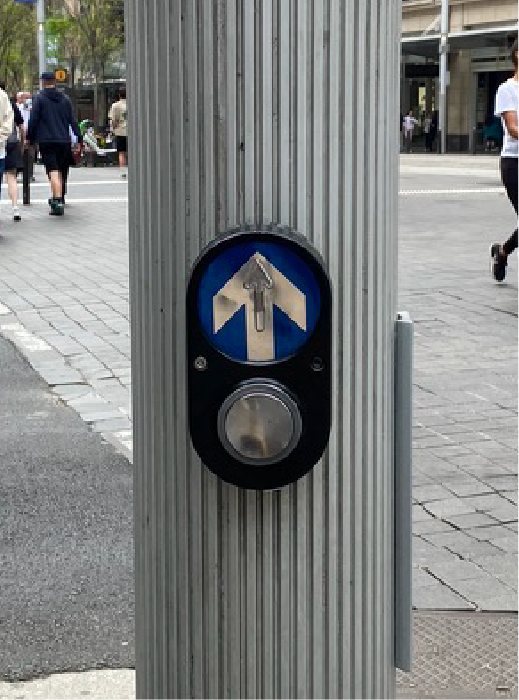
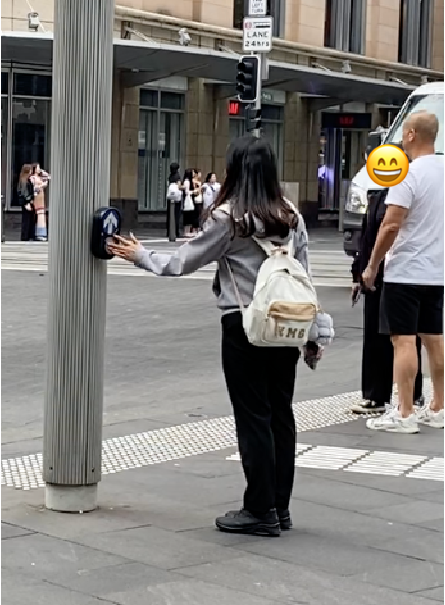
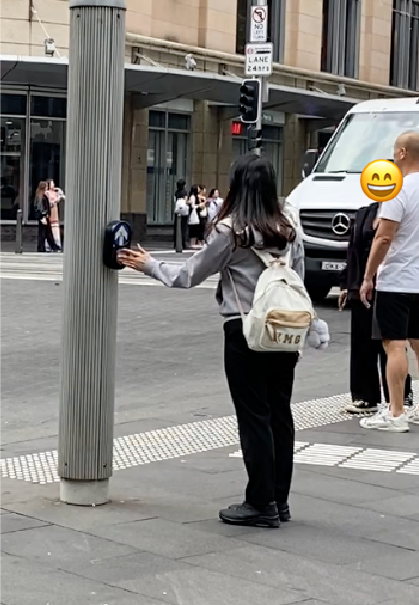
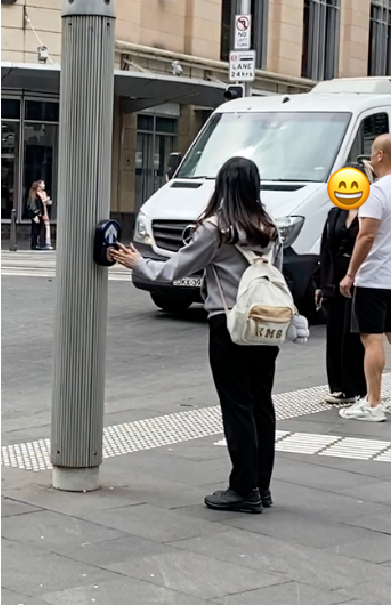
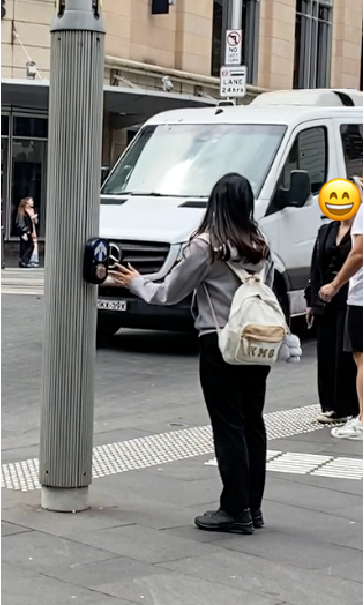
The PB/5 is one of Australia's most familiar pieces of street furniture: the round steel button beneath a blue tactile arrow, mounted about a metre off the ground at signalised crossings. It was built to serve blind and low-vision pedestrians through sound and touch: a locator tick, a vibrating arrow, a distinctive tone when the signal changes.
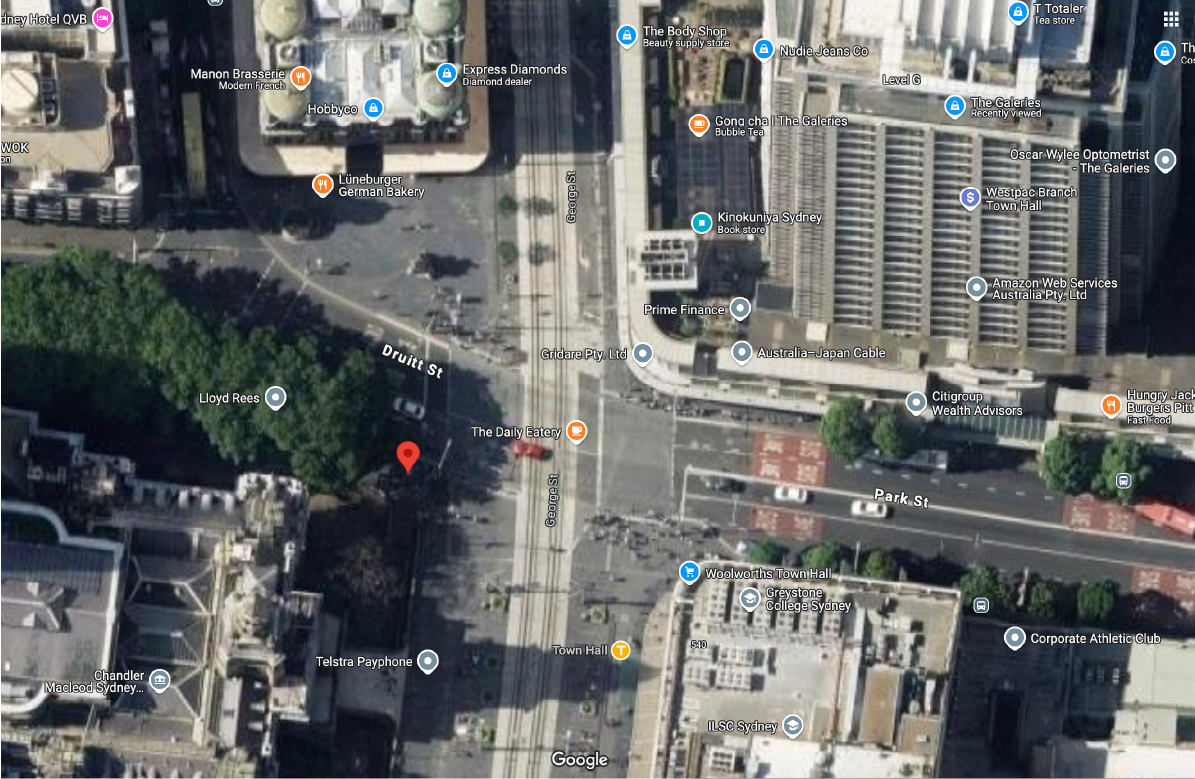
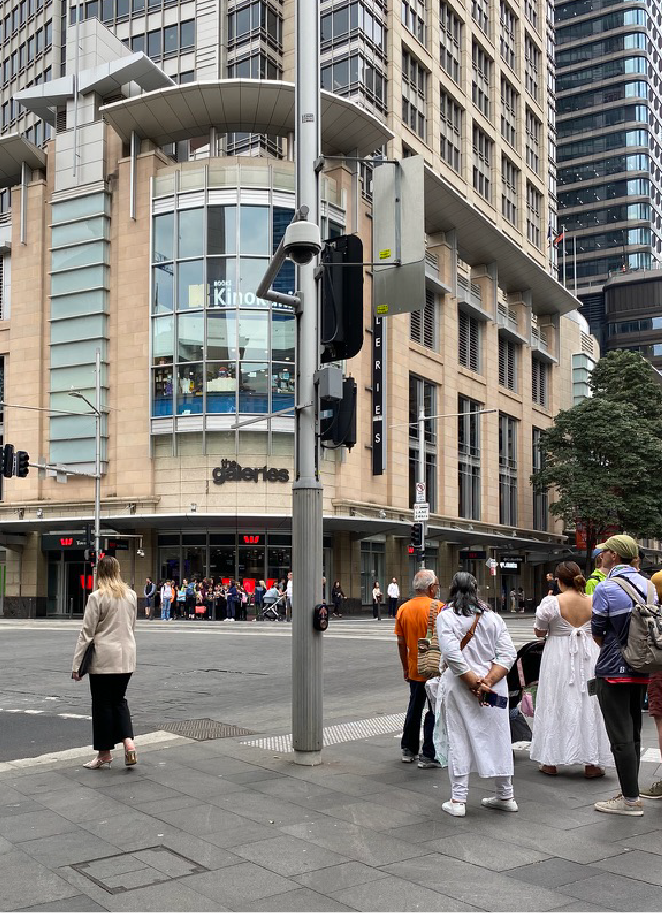
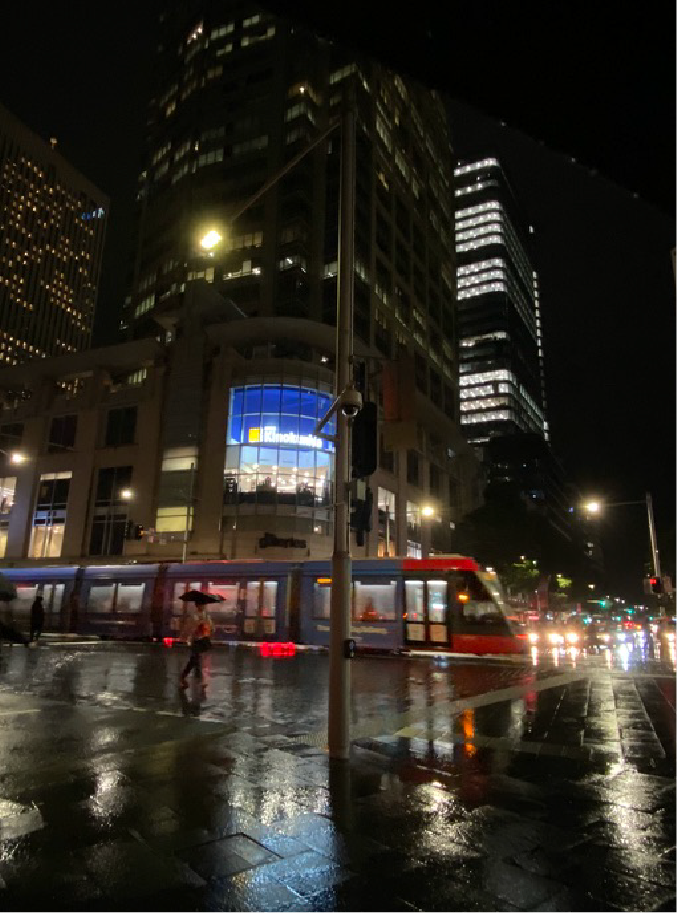
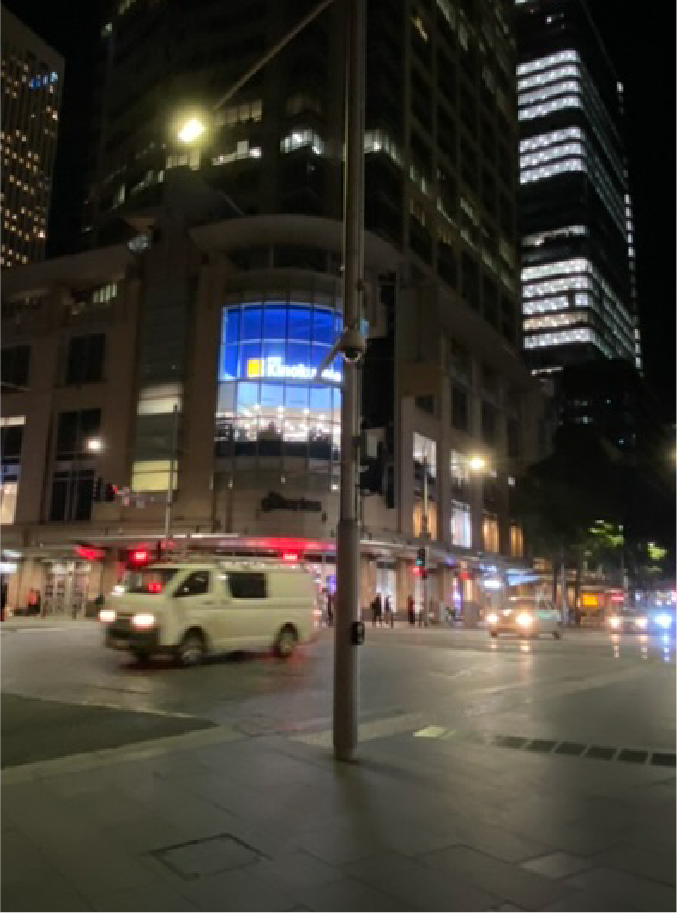
But the site chosen for this study is anything but quiet. At the Town Hall corner, bounded by the QVB, The Galleries, Woolworths and Hotel QVB, layered with light rail, buses and heavy foot traffic, the button meets a constant, diverse stream of users. Watching how they press it reveals a gap the original design never closed.
02 — the observations
Observations were staged across different times, weather and light to separate genuine behaviour patterns from circumstance. The conditions changed; the core reflex, pressing more than once, did not.
session 01
Cloudy morning
2 hours24°Cn = 83
session 02
Rainy evening
30 min15°Cn = 15
session 03
Clear evening
1 hour16°Cn = 34
03 — what the data showed
>1
presses per person
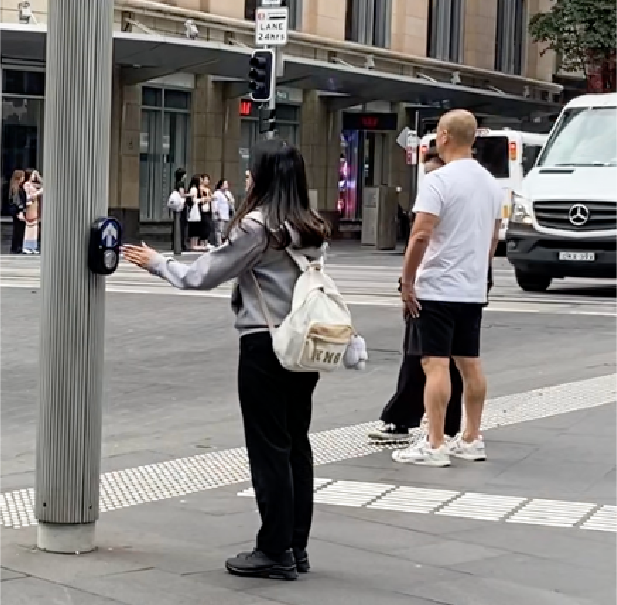
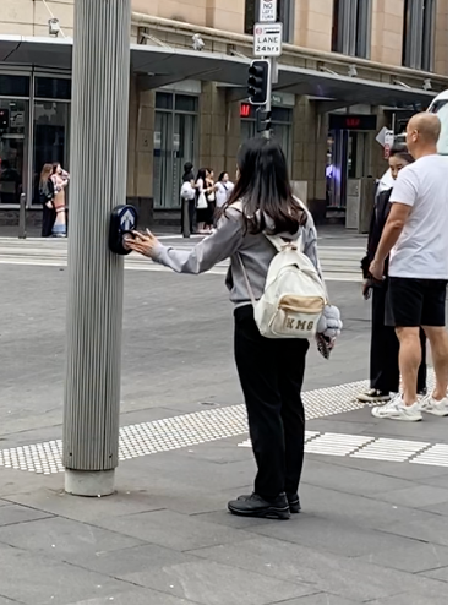
In all three sessions, more people pressed the button more than once than pressed it a single time.
~1.3s
per multi-press
Average duration of a repeated interaction, often four jabs in barely more than a second.
43 / 21
multi-finger vs. single
In the morning session, presses using more than one finger outnumbered single-finger presses two to one.
04 — patterns of behaviour
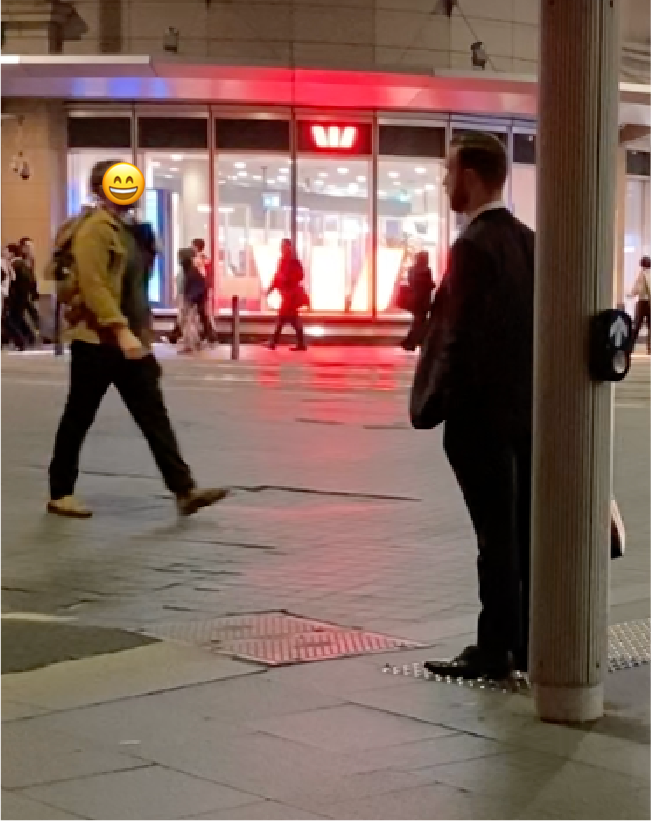
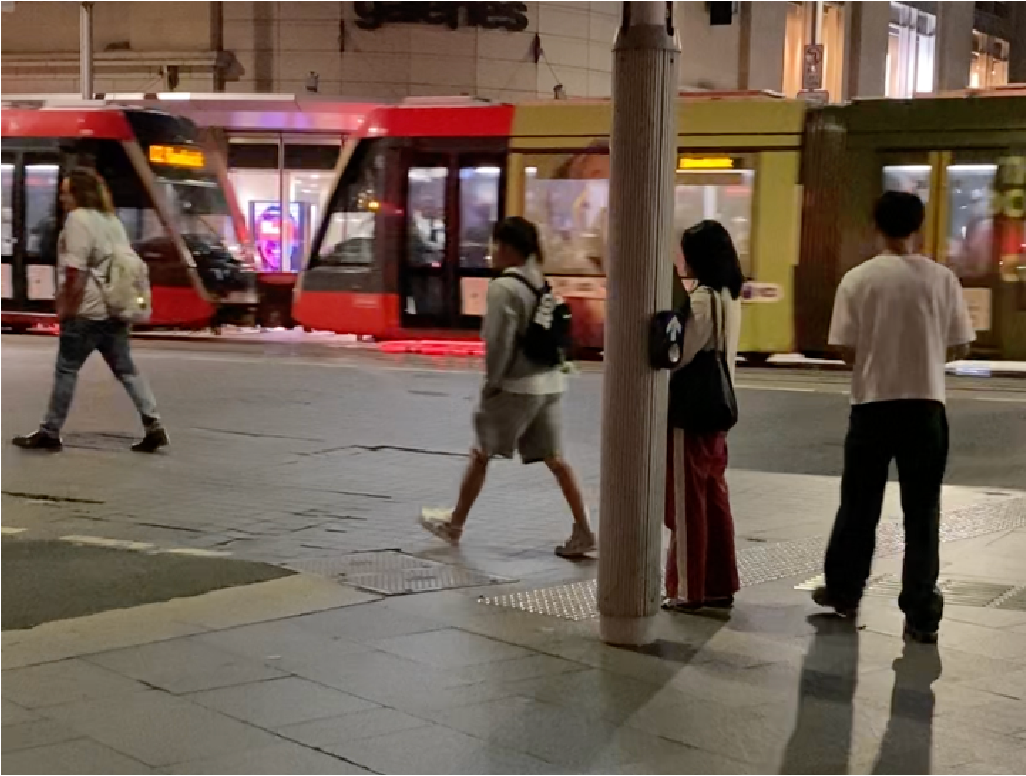
Field observation surfaced a spectrum of behaviour that aligns closely with Xie et al. (2016) on crosswalks with push buttons, from strict compliance to outright disregard of the signal:
05 — the argument
claim
The PB/5 fails to communicate its operational status to sighted pedestrians. There is no visible sign a press has registered.
reason
With no visible confirmation, a person cannot know their press was received.
evidence
Observed repeated pressing, hesitation, risk-taking and signal disregard across all sessions.
warrant
When a system gives no clear feedback, users lose confidence in it, and its usage and efficiency suffer.
Pedestrians press repeatedly because the button never tells them it heard. Give it a visible reply, and one press is enough.
— central hypothesis, pressing issues
06 — grounding in the literature
For the full research and findings behind this project, get in touch at hello@ca-tran.com. Interact with the working button in the demo below.

